
Why Did Governments Decide To Regulate Crypto Space?
The 2017 crypto boom did bring digital currencies into mainstream attention, but at the same time, it also provided a perfect opportunity for scammers as well. The bull run in 2017 also gave rise to Initial Coin Offering (ICO), which was once considered to be one of the finest ways for raising funds for blockchain projects. However, within a year it turned out that a majority of the projects which raised funds via different ICOs were scam who robbed millions of dollars from people.
A study from a Statis group revealed that two-thirds or 78% of the ICOs turned out to be a scam while only 15% ICOs were able to make it to any exchange. Keeping these scams in minds, governments and regulatory bodies started to look into cryptocurrencies and how it can impact their economy. Many countries like South Korea, China have banned any ICOs while many others have issued warning to investors as well as put it under security laws.
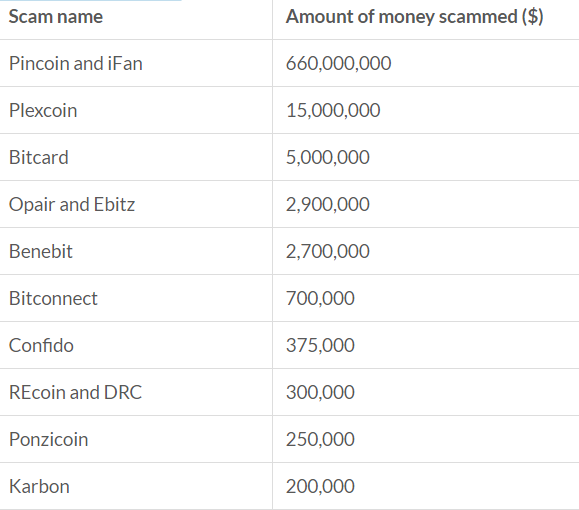
Some of the significant ICO scams include
Not All Digital Tokens Are Cryptocurrency
As of today, there are thousands of crypto tokens listed on different exchanges around the globe, but a majority of them does not fulfil even the essential criteria of decentralization. This is the reason the US Security and Exchange Commission (SEC) has cleared that as per their definitions of securities, only Bitcoin and Ethereum are considered as an asset like gold, and all other so-called cryptocurrencies must adhere by the security laws.
One of the main reasons for the heavy regulations from the government arose only after numerous ICO projects and pyramid scheme started to siphon billions of dollars. OneCoin promised to be a private blockchain token and eventually turned out to be a pyramid which took away $4 billion of people's money. Similarly, PlusToken was another crypto wallet which turned out to be a scam.
Government Would Never Allow Any Private Body to Issue Currency
The complaint about heavy regulation from the governments is understandable. Still, people need to realise that no government would like to give up on their financial sovereignty and power to issue currency. The fear of government is not from decentralised currencies, but private companies who want to get the power of issuing coins in the name of cryptocurrencies. Facebook is a perfect example of why government maintain heavy scrutiny towards
Facebook announced its aspirational project of a global digital currency in the form of Libra, but its working model does not bear any resemblance to cryptocurrencies. The regulators also accused Libra of merely trying to piggy ride the existing financial infrastructure by making stable coin backed by multiple fiat currencies. They also raised a question on why Facebook did not apply for a private bank license if they wanted to enter into commercial space.
The main issue is not as much with the cryptocurrencies as it is with these private firms trying to make the most of the opportunity at hand. Regulators have called out Facebook for its record on violating privacy laws and data leaks on its platform and how the firm was planning to provide security measures to such a large number of users on its platform.
Conclusion
Bitcoin is a decentralised currency, and no government or authority have any authority over its use, this is the same reason many countries have regulated it for exchanges. The primary need for regulation arises to protect the citizens against any fraud or scam, as in the absence of any law there won't be any provision for the people to appeal against any injustice caused about cryptocurrencies.
Many governments have also started to launch a Central Bank Issued Digital Currency which won't be decentralised but avails all the benefits of cryptocurrencies like fast cross-border remittance services, and lower transaction fees. As for the mainstream cryptocurrencies like Bitcoin and Ethereum, the government won't have an issue until and unless users don't use it for illicit activities.
#blockchain#Cryptocurrency#Regulations#stable coin
source>>https://www.cryptoknowmics.com/news/cryptocurrency-regulations-a-need-or-necessity
